
Why the Powerful Never Pay for War
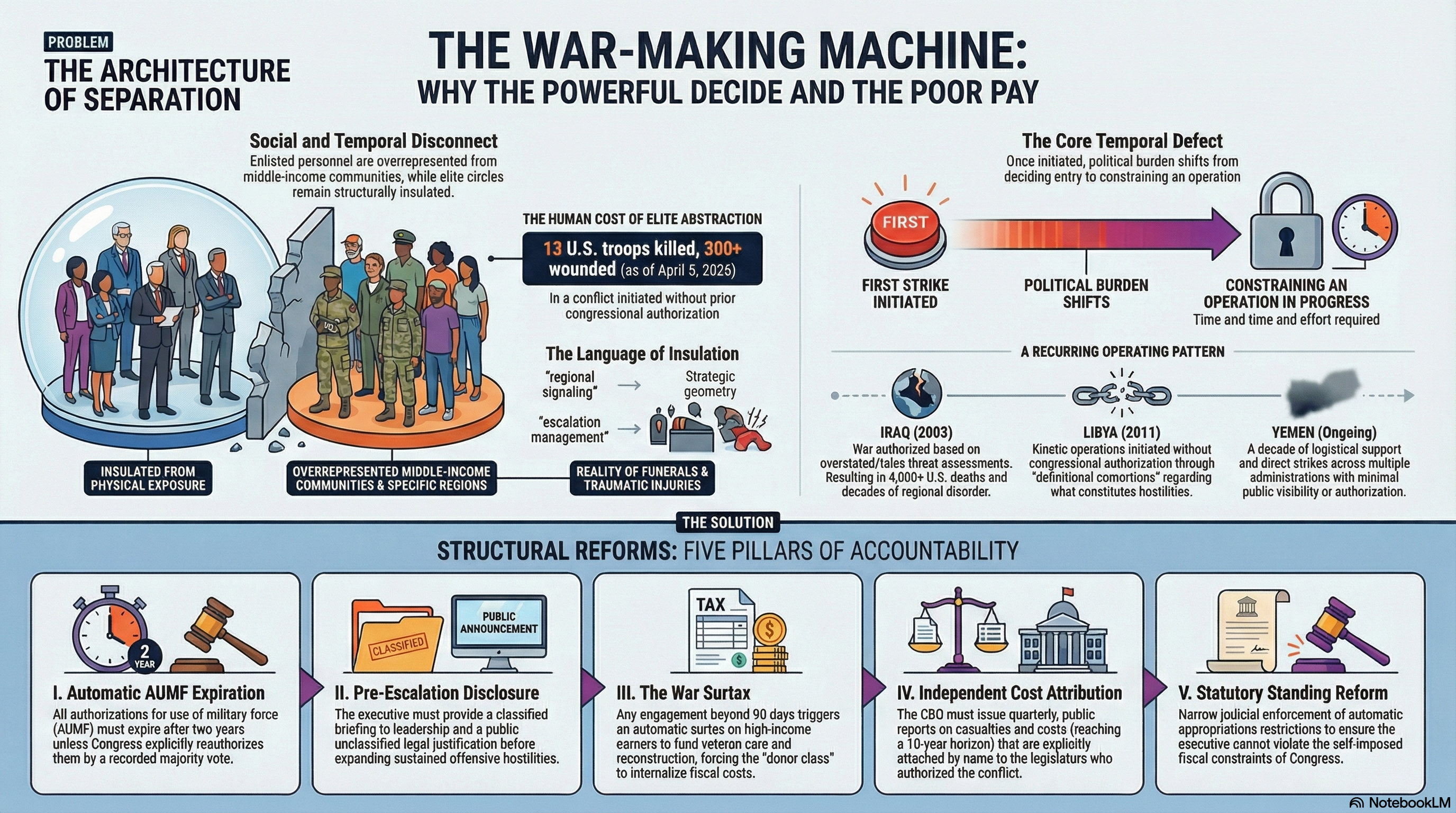
War is often presented as a national act. That framing is emotionally useful and politically convenient, but it is false in practice. Nations do not suffer war evenly. They never have. The burdens are distributed downward.
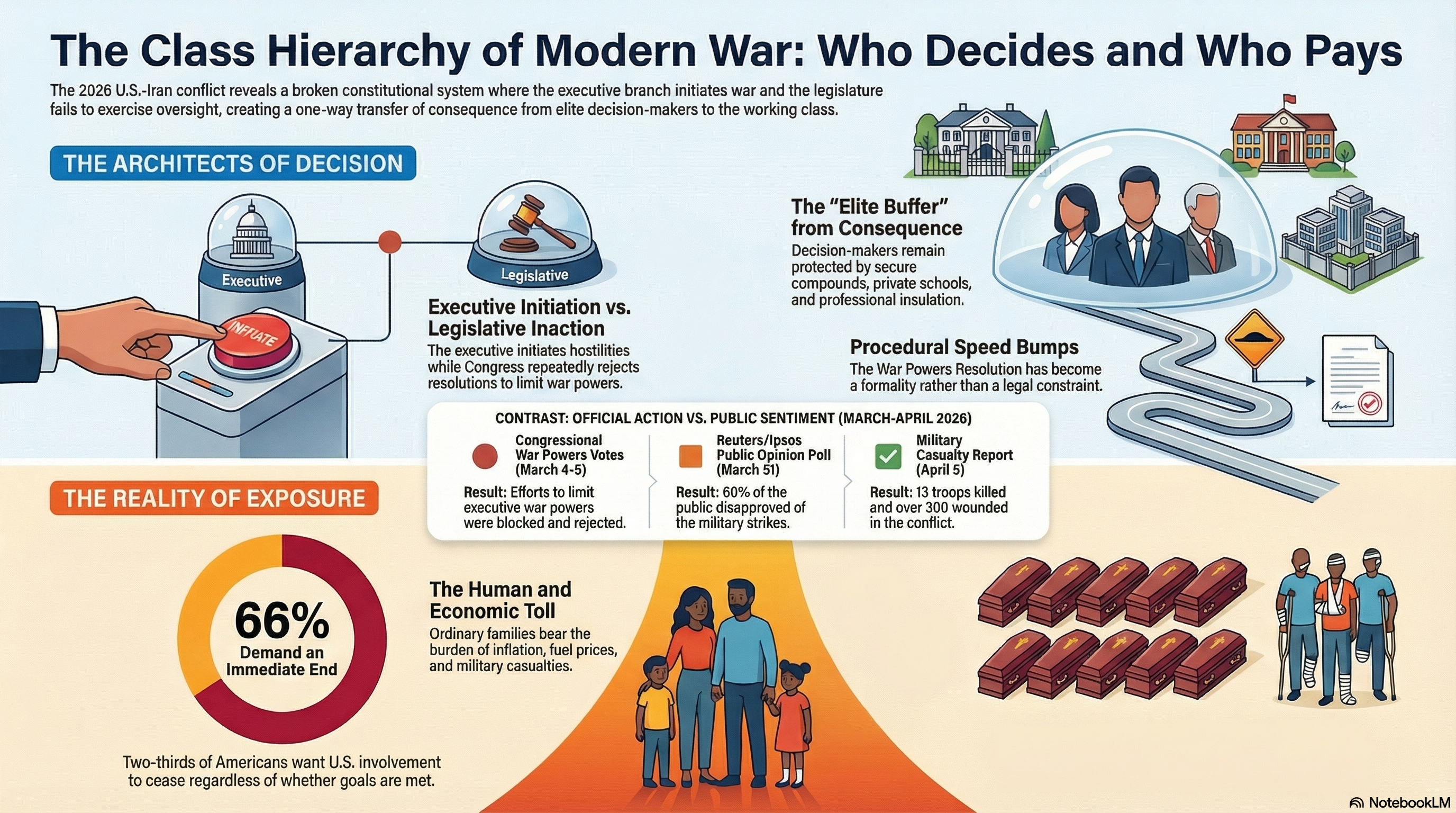
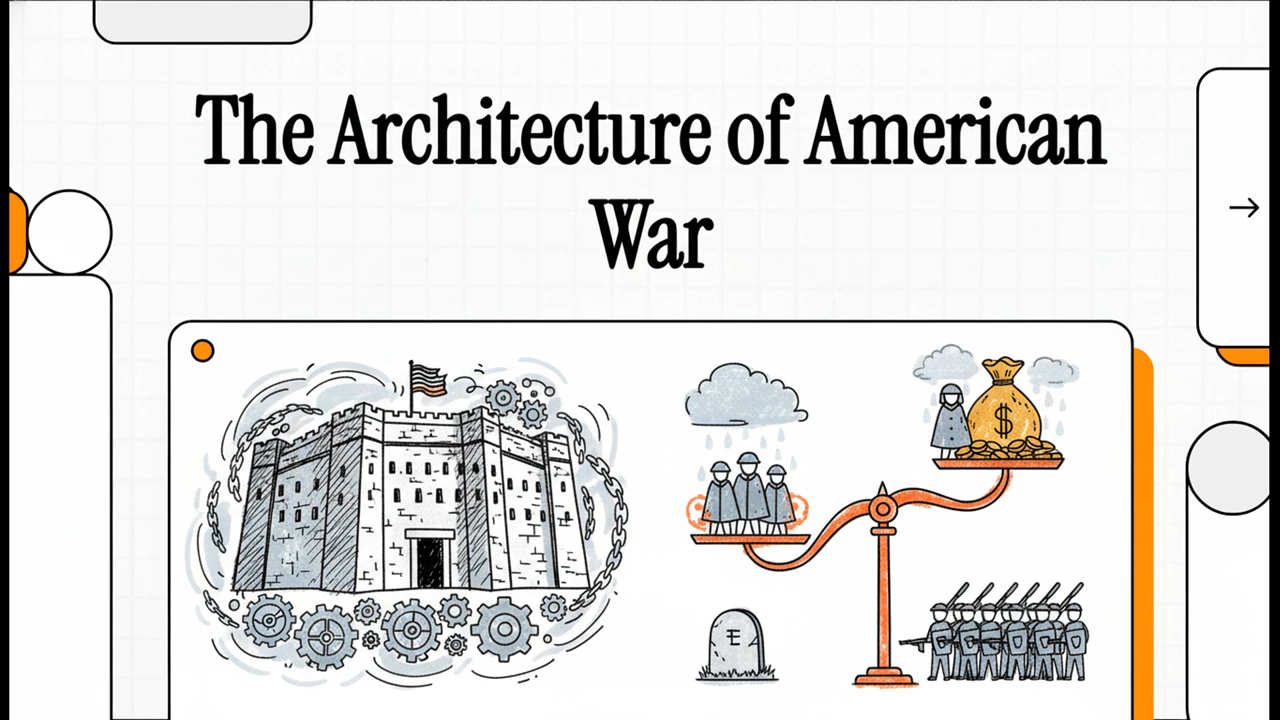
The powerful decide. The public funds. The poor fight. The civilian edge zones burn. Veterans carry what remains home in their nervous systems, relationships, and bodies. Meanwhile, the people who authorized the destruction move through secure hallways, issue commemorative language, appear on panels, and eventually call the catastrophe “complex.”
That is not an accident. It is the design.
The central lie of modern war-making is that sacrifice is shared. It is not. What is shared is the story. What is concentrated is the pain.
In theory, democratic systems are supposed to restrain this. If leaders must answer to the public, and if the public bears the cost of war, then war should be difficult to begin and easy to challenge. But modern systems have solved that problem for power. They have made war politically easier by making its consequences more diffuse, delayed, and class-sorted.
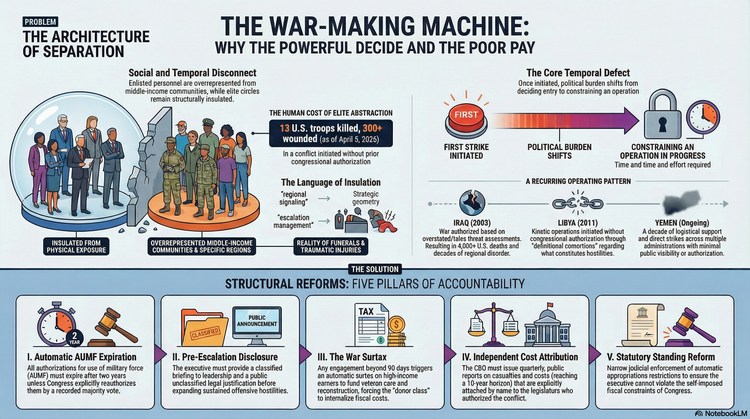
The first mechanism is distance.
The people making the decision are rarely exposed to the immediate reality of the decision. Their children are usually not the ones entering breach points. Their neighborhoods are not the ones losing wage earners. Their bodies are not the ones absorbing blast waves, moral injury, sleep destruction, or the long afterlife of combat stress. They experience war primarily as briefing material, not as intimate consequence.
The second mechanism is financial concealment.
Modern wars are rarely paid for in a way that forces public confrontation at the moment of decision. The bill is stretched across debt, inflation, deficits, future obligations, and long-tail care costs. That matters because pain delayed is accountability diluted. If a population had to feel the full price of war at the exact moment it was launched, war would become far more difficult to sell. Instead, the system distributes the cost so widely and over such a long horizon that the decision-makers can act now and let someone else inherit the invoice later.
The third mechanism is symbolic substitution.
The language of war is saturated with abstractions: credibility, deterrence, stability, strength, national interest, strategic necessity. These phrases do political work. They convert blood into concept. They make destruction sound managerial. They allow leaders to speak about escalation without speaking about incineration, displacement, fatherlessness, amputations, trauma, and the institutional abandonment that follows once the cameras leave.
This is why the powerful so rarely pay for war in any meaningful way. The system translates violent decisions into prestige language on the front end and into distributed suffering on the back end.
The fourth mechanism is moral outsourcing.
War is usually justified as duty, security, or responsibility. But the moral burden is not carried equally by those who use that language. The official who authorizes force may suffer criticism. The service member suffers implementation. The family suffers absence. The civilian suffers impact. The veteran suffers memory. The taxpayer suffers extraction. The next generation suffers the normalization of all of it.
And yet the public is continuously encouraged to see war through the lens of noble intent rather than institutional incentive.
That is how impunity survives.
Not because no one can see the damage, but because the architecture assigns damage to people with the least ability to convert suffering into political consequence.
This is the real class hierarchy of war.
At the top are those who can initiate violence while remaining buffered from its personal cost. Beneath them are the professional managerial layers that rationalize, message, legalize, and operationalize the decision. Beneath them are the populations expected to absorb the consequences as duty, patriotism, or unfortunate necessity. At the very bottom are the civilians and fighters whose lives become the material the system spends.
Once you see that structure, a great deal becomes clearer.
Why war can be repeated after failure.
Why disproven premises do not reliably disqualify future advocates.
Why legislators posture after the fact.
Why media language becomes cautious at the exact moment clarity is most needed.
Why the dead are honored more consistently than the living are cared for.
Why the public is asked to feel pride faster than it is allowed to ask questions.
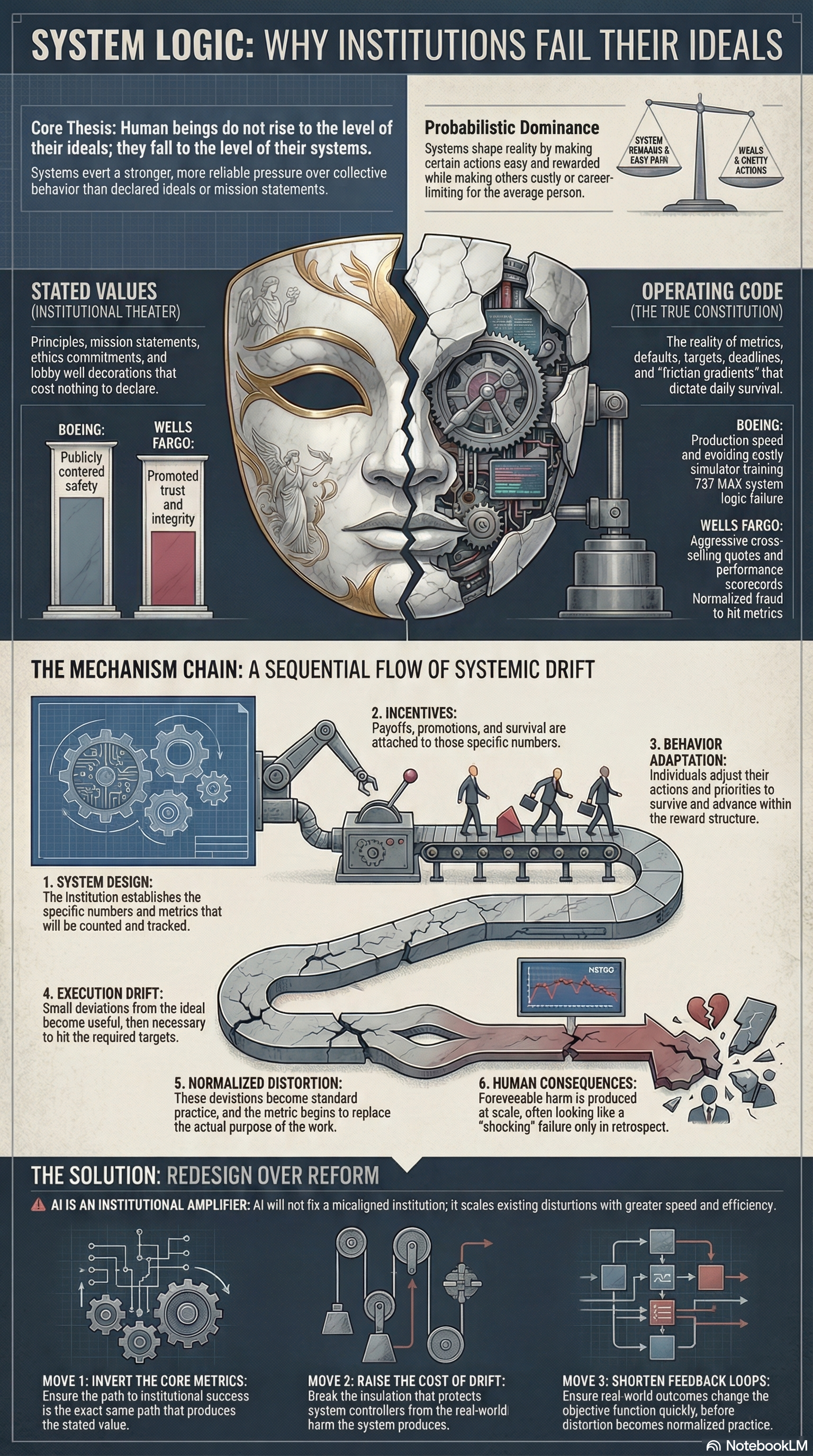
The system does not require universal corruption to produce these outcomes. It only requires insulation. It only requires a structure in which the initiators of force are not forced into direct contact with the full human price of what they authorize.
That is the core problem.
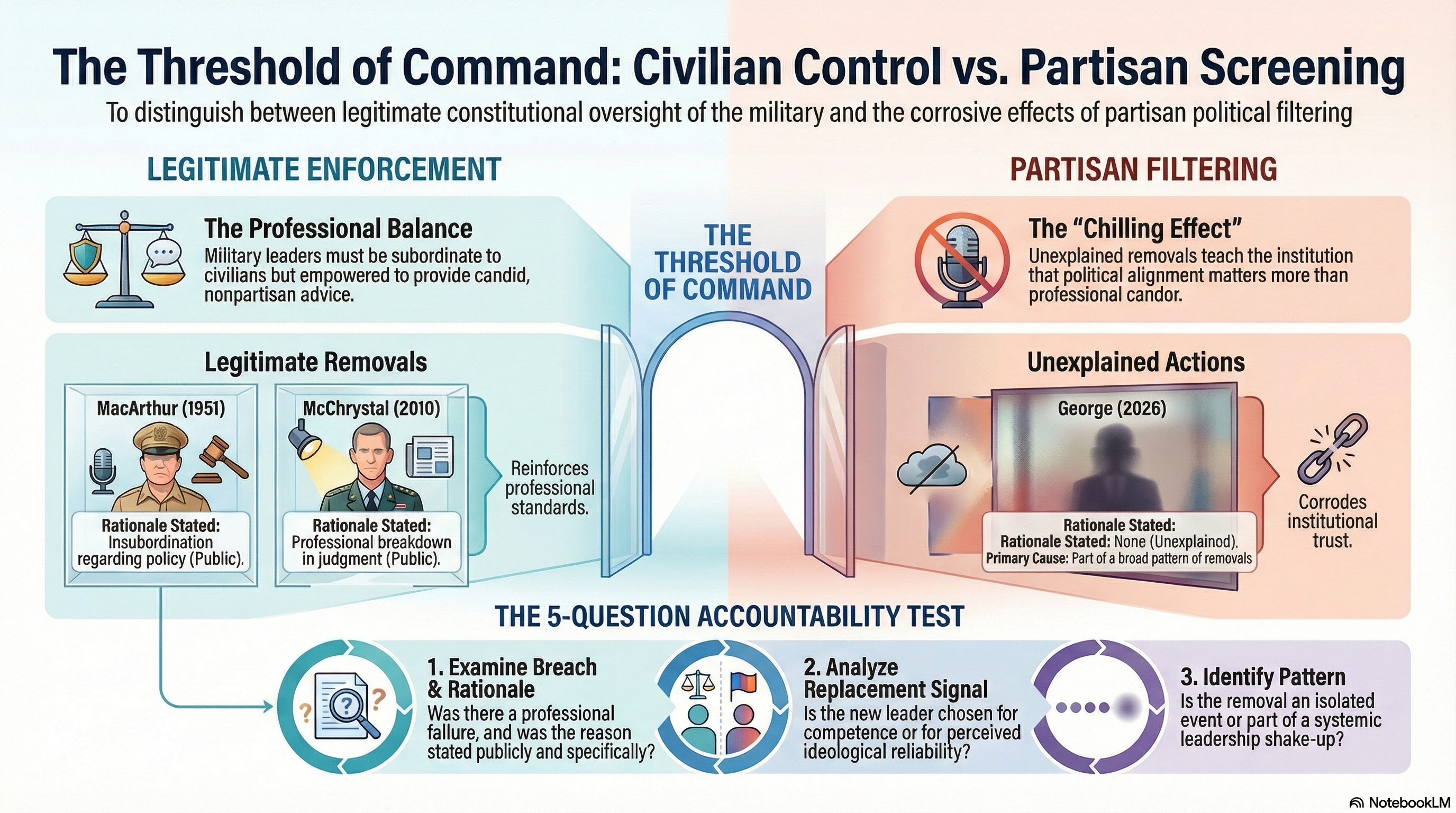
War persists not merely because leaders are aggressive, corrupt, or foolish, though some are. War persists because the system has solved the accountability problem for them. It has separated command from consequence. It has made initiation fast, scrutiny weak, cost diffuse, and punishment rare.
If a republic wanted to restrain war seriously, it would reverse those incentives. It would make the legal threshold higher, the evidentiary burden public, the fiscal cost immediate, the oversight continuous, and the personal accountability inescapable. It would treat the use of force not as a branding opportunity for power, but as the most morally dangerous act a state can perform.
Until then, the pattern will continue.
The powerful will speak the language of necessity.
The public will inherit the debt.
The lower ranks will carry the trauma.
The civilians will bury the dead.
And the people who set it in motion will call it history.
Member discussion