
The Procedural Grind: Decoding the Tate Legal Matrix
The legal landscape surrounding Andrew and Tristan Tate is not best understood through the usual media binary: imminent conviction or total exoneration.
That framing is too lazy.
The more accurate picture is procedural grind.
As of May 5, 2026, the Tate legal matrix is spread across Romania, the United Kingdom, and the United States. It involves criminal investigations, authorized UK charges, civil claims, asset disputes, travel restrictions, and political noise layered over legal procedure. The result is a public narrative that often moves faster than the actual court record.
That matters.
Because in a case this charged, the first casualty is usually precision.
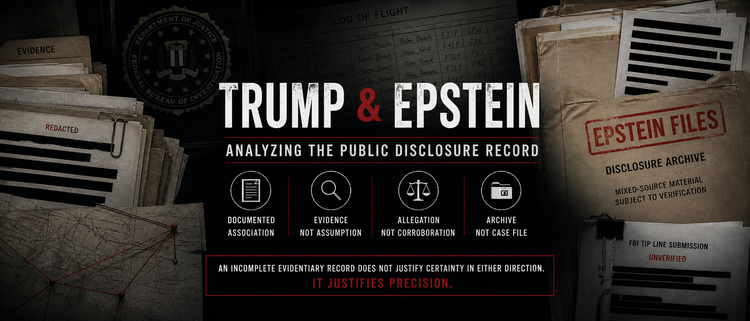
The Tates deny wrongdoing across the allegations against them. This article is not an argument for guilt or innocence. It is a procedural map: what has actually happened, what has not happened, and where headlines have blurred the difference.
1. The Romanian Case Was Not Simply “Dismissed”
One of the most persistent myths around the Tate case comes from the December 2024 Romanian ruling.
Many headlines treated the decision as if the main case had been dropped or erased. That is not what happened.
On December 19, 2024, the Bucharest Court of Appeal ruled against sending the case to trial and sent it back to prosecutors. Reuters reported that the court cited flaws in the indictment, rights violations, and earlier evidentiary exclusions, including statements and witness testimony deemed inadmissible.
That is not the same thing as an acquittal.
It is also not the same thing as a trial-ready case.
The correct procedural read is this:
The Romanian case entered a repair-and-reset posture. Prosecutors suffered a major procedural defeat, but the matter remained open.
Associated Press later made the same distinction plainly: the case could not go to trial because of legal and procedural irregularities, but it had not been closed.
That is the first major contradiction.
Public narrative wanted a clean label.
The court record gave a procedural mess.
2. “Charged” vs. “Under Investigation” Is Not a Small Distinction
The word “charged” gets used loosely in public reporting, especially when a case has already moved through indictment, appeal, remand, and procedural reset.
In Romania, the Tates were formally indicted in 2023. But after the December 2024 ruling, the case was sent back to DIICOT rather than proceeding cleanly to trial. Reuters reported in April 2026 that prosecutors were still investigating the first case, and that a second investigation begun in 2024 involved suspicions including organized crime, human trafficking, trafficking of minors, sex with a minor, and money laundering.
That means the cleaner phrasing is:
The Romanian matter remains active, but procedurally damaged.
Not “case dismissed.”
Not “trial imminent.”
Not “nothing happened.”
Not “conviction inevitable.”
This is where media compression poisons public understanding. Legal systems do not move like headlines. They move like machinery with missing bolts.
3. April 2026 Changed the Romanian Restriction Story
Your March 2026 version needs one important update.
On April 6, 2026, a Romanian court lifted all preventative judicial-control measures against Andrew and Tristan Tate. Reuters reported that the court removed the obligation for regular police check-ins, and that the ruling was final and could not be appealed.
But again, the distinction matters.
The lifting of judicial controls does not mean the investigations disappeared.
Reuters reported in the same article that prosecutors were still investigating the first case and that a second criminal investigation remained active.
So the updated procedural status is:
Restrictions lifted. Investigations continuing. No Romanian trial currently underway.
That sentence is the spine.
Everything else is noise unless it attaches to that.
4. The Travel Narrative Was Also Flattened
The February 2025 travel story is another place where narrative outran procedure.
When the Tates left Romania for the United States, some headlines framed it as flight. But DIICOT had modified the restriction preventing them from leaving Romania. Agerpres reported that DIICOT confirmed the case prosecutor allowed Andrew and Tristan Tate to leave Romania, while emphasizing they remained under judicial control and had to return when summoned.
AP also reported that DIICOT approved a request to change the travel restrictions, while the brothers remained required to appear before judicial authorities when summoned.
That does not make the travel legally meaningless.
It also does not make it “fleeing” in the strict procedural sense.
The better framing:
They left Romania after travel restrictions were legally modified, while remaining bound to appear when required.
That is less dramatic.
Which is exactly why headlines hate it.
5. The UK Track Is Not One Case
The UK side is often collapsed into one vague blob of “charges” and “civil allegations.”
That is wrong.
There are at least two distinct tracks.
First, the criminal track: in May 2025, the UK Crown Prosecution Service authorized 21 criminal charges against Andrew and Tristan Tate. Reuters reported that Andrew Tate faces 10 charges in Britain, including rape, actual bodily harm, human trafficking, and controlling prostitution for gain, while Tristan Tate faces 11 charges including rape, actual bodily harm, and human trafficking. The CPS also said Romanian domestic criminal matters must be settled first.
Second, the civil track: four women are suing Andrew Tate in the UK High Court over alleged physical and sexual abuse and coercive control. Reuters reported that the civil trial was moved forward to June 2026, after originally being expected in 2027. Tate denies the allegations and says the claims are false and that sexual activity was consensual.
These are not the same legal proceeding.
The UK criminal charges involve one set of complainants and are tied to extradition mechanics.
The UK civil case involves four women and proceeds under a different legal standard.
That distinction matters because civil liability and criminal prosecution are not interchangeable. Different burden. Different forum. Different legal consequences.
Same public confusion, obviously, because why allow the public to understand anything when chaos gets better engagement.
6. The CPS Decision on the Civil Allegations Was Not the End of the UK Story
In September 2025, the CPS decided not to bring criminal charges based on allegations made by the four women pursuing the civil case, saying the legal test for prosecution had not been met.
That does not eliminate the civil claim.
It also does not erase later developments.
In March 2026, Hertfordshire Police reopened a probe into rape and sexual assault allegations from 2014 and 2015, while those women continued pursuing the civil case. Euronews reported that the CPS had previously declined to charge after the earlier investigation, and that the High Court civil trial was set to begin in June 2026.
So the UK picture is not “criminally cleared.”
It is:
CPS declined one criminal charging route tied to the civil claim; a civil case remains scheduled; a related police reinvestigation has reopened; and separate UK criminal charges authorized by CPS remain pending behind the Romanian proceedings.
That is the legal matrix.
Messy, layered, and completely incompatible with social-media bumper stickers.
7. The U.S. Track Is Preliminary, Not a Charge Sheet
The Florida angle is another place where wording matters.
After the Tates arrived in Florida in February 2025, Florida officials discussed reviewing whether the state had jurisdiction. AP reported that Florida Governor Ron DeSantis said the brothers were not welcome and that his administration was conducting a preliminary inquiry. Florida’s attorney general said the state would examine whether any alleged conduct triggered Florida jurisdiction.
That is not the same as criminal charges.
The careful phrasing is:
Florida opened or discussed a preliminary inquiry into possible jurisdiction. No Florida criminal charges were reported in the materials reviewed here.
In a normal information environment, that distinction would be automatic.
Unfortunately, we live inside the casino version of public discourse.
8. The Asset-Seizure Story Is Also Not Static
The Romanian asset narrative has also shifted.
AP reported in February 2025 that a court had ruled in favor of an appeal by the Tates to lift the seizure of multiple assets, including luxury vehicles, land, properties, company shares, and previously frozen bank accounts, while some assets remained under precautionary seizure.
So “assets seized” is incomplete.
“Assets permanently taken” is worse.
The accurate version is:
Some assets were seized, some seizure measures were successfully challenged, and some asset restrictions reportedly remained.
Again: procedural grind.
Not cinematic closure.
The Real Story: Procedural Damage, Not Narrative Victory
The Tate legal matrix is not a clean morality play.
It is a procedural collision.
Romanian prosecutors suffered a major setback when the case was returned rather than sent to trial. The Tates gained significant procedural wins, including the lifting of travel and judicial-control restrictions. But those wins did not erase the investigations.
In the UK, the CPS authorized serious criminal charges, but extradition remains tied to Romania’s unresolved legal process. Separately, the UK civil case is moving toward a June 2026 trial. Another UK police investigation has also reopened.
In Florida, the inquiry remains preliminary, not a formal charge structure.
So the most accurate current frame is this:
The Tate case is not over. It is not trial-ready in Romania. It is not cleanly dismissed. It is not legally simple. It is a multi-jurisdictional procedural grind where every side has won something, lost something, and weaponized the ambiguity.
That is the story.
Not the influencer story.
Not the media story.
The systems story.
And the system, as usual, is where the truth hides after everyone finishes yelling.
#AndrewTate #TateBrothers #LegalAnalysis #CourtFilings #MediaNarratives #ProceduralJustice #Romania #UnitedKingdom #Florida #DueProcess #PublicNarrative #InstitutionalAnalysis #SystemsThinking #Power #Accountability #MessageToHumanity #RegulatedPresence
Member discussion